

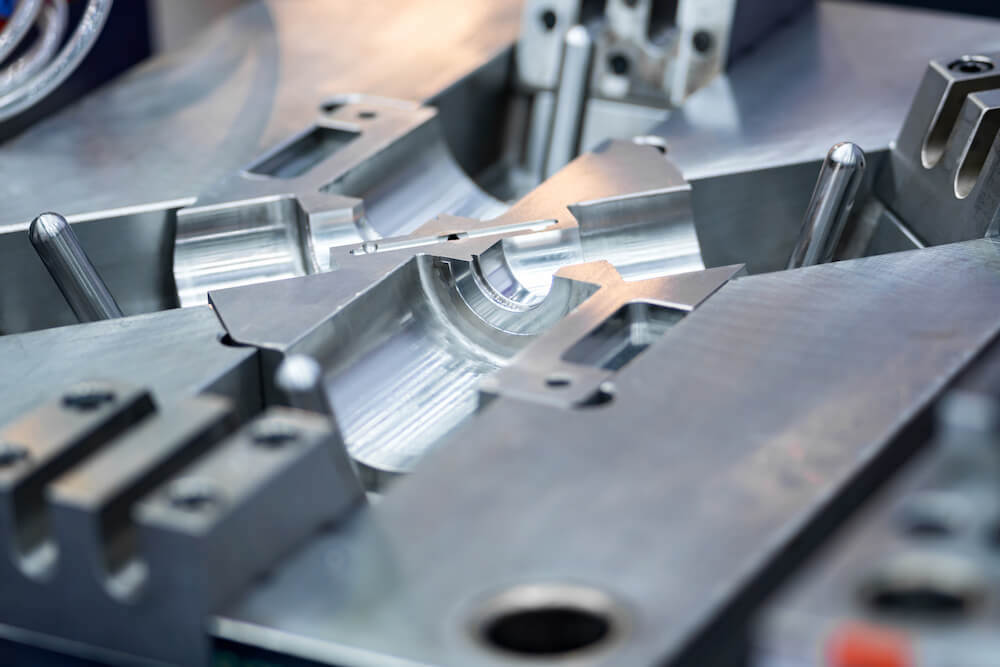
Prototype injection molding enables companies to quickly and cost-effectively produce low-volume plastic parts to test form, fit, and functionality before investing in full production tooling. However, many organizations fail to consider design for manufacturing (DFM) principles when developing prototypes. If DFM issues are only uncovered after the part is molded, this results in extensive and expensive mold rework.
Engineers can minimize mold fabrication time and cost by optimizing parts for manufacturability, even at the prototype stage, while maximizing learning around part performance with fewer design iterations. A prototype resembling production intent provides key insights into any DFM refinements needed for the final product. Designers must consider basic DFM guidelines around part geometry, draft angles, rib design, material selection, and other factors when prototyping with injection molds.
This article outlines DFM considerations and tradeoffs specifically for prototype injection molds.
What Is Injection Molding DFM and Why Does It Matter for Prototypes?
Design for manufacturability refers to the practice of designing parts and products while considering manufacturing processes. The goal is to optimize the design geometry and choice of materials to minimize production costs while maintaining quality and functionality.
For injection molding specifically, some key DFM principles include:
How Material Selection Shapes Injection Molding DFM Outcomes
The material chosen impacts cycle times, mold filling behavior, shrinkage/warpage tendencies, ejection forces, and cost. During resin selection, DFM considers viscosity, thermal properties, additives, and other factors. Common prototype resins like ABS, polypropylene, nylon, and polycarbonate have distinct DFM considerations.
Mold Design Principles That Drive Injection Molding DFM Success
DFM guides effective mold component layouts, cooling channel placement, ejector pin positioning, and draft angle specification. Standardized mold bases and inserts also provide DFM benefits for prototypes.
How Part Design Guidelines Enable Injection Molding DFM
This involves designing parts with uniform wall thicknesses, minimal undercuts/side actions, adequate radii at corners, and positioning of cosmetic surfaces/features. Geometry to ease ejection and prevent sink marks is also considered.
By internalizing these key DFM guidelines during the design process, engineers can greatly smooth the transition from prototype to production tooling for injection molded parts.
What Injection Molding DFM Delivers in Prototype Tooling
Applying DFM principles in prototype tooling provides several key advantages, including:
How Injection Molding DFM Cuts Cost and Improves Efficiency
Optimizing parts for manufacturability minimizes material waste, machine downtime, and labor expenses associated with production. DFM enhances consistency and predictability in the injection molding process at low and high volumes.
Why Frontloading Injection Molding DFM Accelerates Development
Frontloading DFM in the design process reduces the need for expensive reworking and tweaking of prototypes after initial testing. This accelerates production schedules and time-to-market. Companies can reduce development time when using DFM-optimized prototypes.
How Injection Molding DFM Produces Higher-Quality Prototypes
Prototypes fabricated with manufacturing considerations in mind better reflect the true production intent part. This means they exhibit enhanced dimensional accuracy, durability, and aesthetics for more realistic concept validation.
Incorporating even basic DFM considerations into prototype injection molded parts yields dividends across cost, time, and quality metrics while reducing project risk.
How to Apply Injection Molding DFM During Prototype Development
Engineers looking to reap the most benefits from DFM in prototyping should take the following steps:
Run an Injection Molding DFM Analysis Before the Mold Is Built
In the design process, analyze part geometry, surface finishes, tolerances, assembly requirements, and other factors that impact manufacturability. Typical molded part tolerances for most features is +/- 0.005”. Tighter tolerances can be held, but part prices increase with the required precision. Check wall thicknesses, draft angles, rib placement, and more against DFM guidelines.
Work with Mold Makers to Align Injection Molding DFM Constraints Early
Work closely with your injection mold partners during prototyping to understand manufacturing capability around part complexity, material limitations, surface finishes, tolerances, and secondary operations.
Use Simulation Tools to Validate Injection Molding DFM Before Tooling
Leverage mold filling, cooling, warp analysis, and other simulation software to optimize the design digitally before committing to a physical mold build. Fine-tune details like gate location/size, runner systems, and cooling channels virtually.
Close the Feedback Loop Between Injection Molding DFM and Production
Gather inputs during prototyping reviews on proposed DFM refinements for consideration in the final production part and tooling design. Document detailed lessons learned throughout the process.
Ongoing collaboration with an experienced mold maker and plastic injection molder in tandem with DFM audits, simulation studies, and continuous improvement processes together set up prototypes for efficient producibility.
Common Injection Molding DFM Challenges and How to Overcome Them
While integrating DFM principles into prototyping delivers tangible benefits, companies may face hurdles, including:
How to Balance Design Innovation Against Injection Molding DFM Constraints
Engineers strive for groundbreaking designs but must temper expectations around geometries, features, and materials that stretch the limits of molding capability during prototyping.
Why Prototype Volumes Create Injection Molding DFM Process Limitations
The full breadth of injection molding techniques and resins may not be accessible in prototype volumes. Engineers must understand associated DFM constraints around part finish, tolerances, and press capacity.
How Production Complexity Changes Injection Molding DFM at Scale
Even if a prototype part meets functional requirements, the context of high-volume manufacturing may demand entirely different DFM considerations around high-cavitation production tooling, automation, quality control, secondary processing, and more.
Mitigation strategies involve early supplier engagement to align on limitations, embracing DFM-optimized simplified geometries focused on key functionality rather than looks, and mapping out a phased scale-up plan detailing proposed DFM enhancements in each next iteration. With deliberate planning, engineers can still reap substantial innovation and learning benefits from DFM-optimized prototyping efforts.
How Protoshop Delivers Injection Molding DFM Expertise and Prototype Tooling
Prototype injection molding presents a valuable opportunity to test plastic part designs before committing to high-volume tooling. However, overlooking DFM principles during prototyping means manufacturers miss out on learnings that can streamline the path to production. Engineers enhance quality, reduce cost, and accelerate time-to-market by factoring in design guidelines around part geometry, material selection, mold components, and manufacturability simulations upfront.
DFM for prototyping injection molds is not intended to stifle creativity but rather unlock innovation with eyes wide open to production intent. This prevents late-stage redesigns that can delay the market launch or high-cavitation tooling that breaks the bank. Collaborating across design and manufacturing teams to align on limitations and mitigation strategies also smooths the technology transition.
Protoshop offers rapid prototype injection molding and mold fabrication services tailored to help engineers test and iterate parts quickly while optimizing for eventual production. Our team brings decades of expertise around complex geometries, material selection, and design refinements to smooth the path from prototyping into manufacturing.
Reach out today to accelerate your plastics prototyping journey!
Frequently Asked Questions
How is DFM for injection molding different from designing for 3D printing?
A part that works perfectly as a 3D-printed prototype does not always translate well to injection molding. The two processes are fundamentally different. Injection molding involves pushing molten plastic into a closed mold, letting it cool and then ejecting the finished part. That sequence introduces design rules that simply do not exist with 3D printing.
For injection molding, parts need draft angles so they can release from the mold, fairly uniform wall thickness to cool evenly and well-planned gate locations so the plastic flows properly. With 3D printing, vertical walls can be perfectly straight, wall thickness can vary freely and there is no concern about removing the part from a tool. Because of this, features that are easy to print are not always easy to mold. DFM helps close that gap by shaping the design around the realities of injection molding early, instead of fixing problems later.
What are draft angles and why do designers forget them so often?
Draft angles are small tapers, usually around one to three degrees, added to vertical walls so the part can be pushed out of the mold without sticking. They are one of the most commonly missed details, especially when a design starts in CAD or is optimized for 3D printing, where straight walls are not an issue.
When draft is missing or insufficient, parts can hang up in the mold. That often leads to higher ejection forces, surface scuffing, or even damage to the part or tool. The taller the wall or the deeper the cavity, the more critical draft becomes. Adding draft from the beginning is far easier and far less expensive than trying to correct the problem after a mold has already been built.
What are ribs and bosses and how should they be designed for molding?
Ribs and bosses are common features, but they need careful attention to avoid defects. Ribs are thin reinforcing features that add strength without making walls thicker. Bosses are raised cylindrical features that hold screws or threaded inserts.
To keep parts looking good and performing well, ribs are usually designed at about 50% to 60% of the main wall thickness. This helps prevent sink marks on the opposite surface. Both ribs and bosses should include draft angles and smooth, rounded transitions where they connect to the main wall to reduce stress. Bosses need enough material to support fasteners, but not so much that they cause cooling problems. Supporting them with ribs or gussets improves strength and helps prevent warping. Gate placement also plays a role, since feeding plastic near thicker features helps ensure they fill properly.
What injection molding defects can DFM help prevent?
Most injection molding defects can be traced back to design decisions, which is where DFM makes the biggest impact. Sink marks happen when thicker areas cool more slowly than thinner ones and DFM reduces this risk by promoting consistent wall thickness and properly sized ribs. Warping occurs when parts cool unevenly and build up internal stress, which DFM addresses through balanced geometry, uniform walls and smart material selection. Proper DFM also looks beyond the part itself and considers the mold, making sure the tool is practical to build, durable in production and capable of producing consistent parts with minimal maintenance.
Other defects can also be minimized with good DFM practices. Short shots are often caused by poor gate placement or inadequate venting. Flash can result when designs demand excessive clamping force. Weld lines form where multiple flow fronts meet and can weaken the part if not planned for. Even cosmetic issues like ejector pin marks and drag marks are largely avoided when proper draft and thoughtful tool design are built into the part from the start.
