

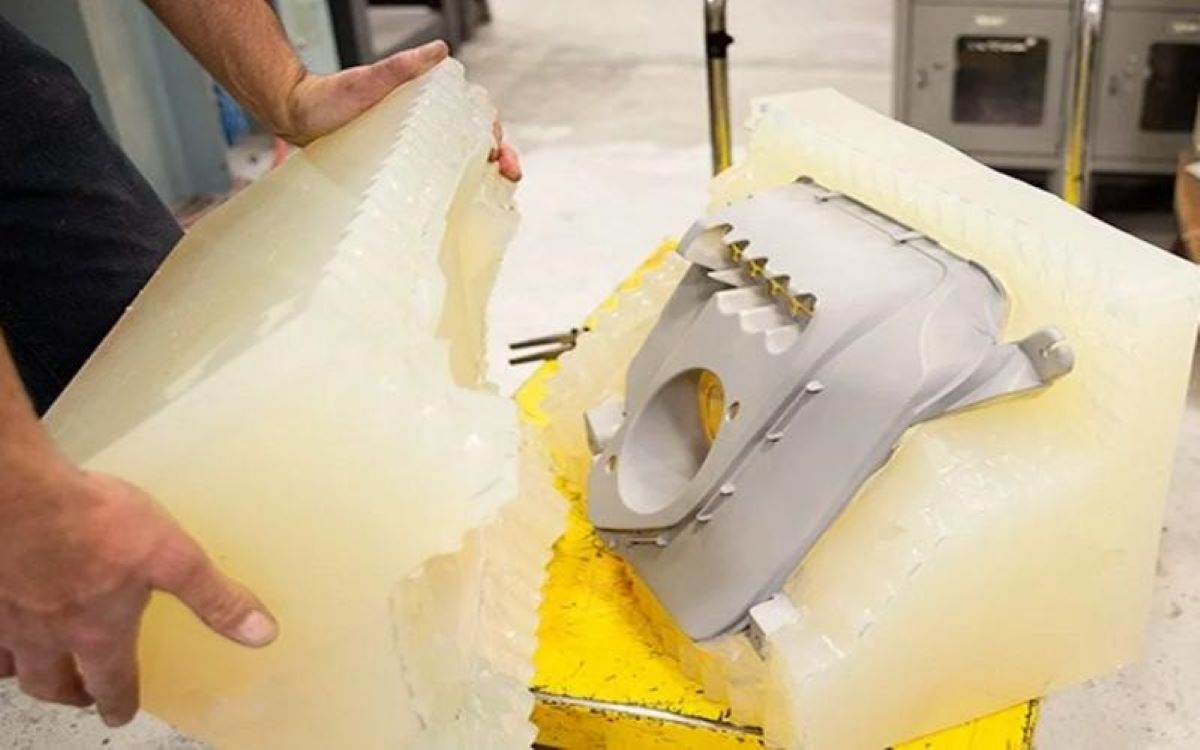
Plastic casting is a rapid prototyping process that uses liquid urethane or resin poured into a silicone mold to produce small batches of plastic-like parts without the upfront investment required for injection molding tooling. While the term “plastic casting” is often searched by teams looking for information about plastic part manufacturing broadly, the process serves a very different purpose than injection molding.
In most cases, plastic casting is best suited for early-stage development activities such as appearance models, concept reviews and preliminary fit evaluations. It provides a fast and cost-effective way to produce physical prototypes, but it does not replicate the mechanical, thermal, or material performance characteristics of production thermoplastics.
For teams evaluating functional performance, regulatory compliance, durability, or production readiness, injection molding remains the preferred validation method because it uses the same material families, process conditions and design constraints found in manufacturing.
Plastic Part Manufacturing Processes
There are three primary approaches for producing plastic parts during product development: plastic casting, injection molding and 3D printing. Each process has advantages, but they serve different stages of the product lifecycle.
Plastic Casting
Plastic casting typically uses polyurethane resin poured into a silicone mold created from a master pattern. Once the two-part liquid material cures, parts can be modified with pigments, coatings, painting, or cosmetic finishes to achieve a production-like appearance.
The primary advantage of plastic casting is speed. Teams can produce small quantities of visually representative parts within days, making the process valuable for early design reviews and concept evaluations.
However, cast urethane parts should not be considered equivalent to injection-molded thermoplastic components. The chemistry, processing method and resulting material properties differ significantly from production plastics. Cast parts are generally unable to reproduce the strength, heat resistance, reinforcement options and long-term stability required for true functional validation.
Injection Molding
Plastic injection molding produces parts by injecting molten thermoplastic material into a machined steel or aluminum mold. The material cools inside the tool and forms the final component geometry.
Although injection molding requires an initial tooling investment, it provides several advantages for product validation. Parts are made from production-grade thermoplastics, allowing teams to evaluate mechanical performance, dimensional stability, thermal behavior and material-specific characteristics before committing to full-scale manufacturing.
Prototype injection molding often uses aluminum tooling rather than hardened steel, reducing cost and accelerating design changes while maintaining the same fundamental process used for production.
3D Printing
3D printing eliminates tooling requirements by producing parts directly from digital CAD files. It remains one of the fastest ways to evaluate geometry, packaging and basic fit.
The limitation is that many printed materials do not behave like injection-molded thermoplastics. Mechanical properties, surface finish, anisotropy and durability can differ significantly from production parts, making printed components unsuitable for many performance-based tests.
Plastic Casting Applications
Plastic casting is difficult to outperform when speed, low quantities and appearance evaluation are the primary objectives. Common applications include:
- Producing approximately 1–25 parts for early development
- Creating appearance models for design reviews
- Performing preliminary fit checks
- Evaluating basic form and assembly requirements
- Producing low-volume demonstration units
The greatest advantage of plastic casting is turnaround time. Parts can often be produced within days rather than weeks, allowing teams to iterate quickly during early development.
However, speed comes with important tradeoffs. When prototype requirements move beyond appearance and basic fit, the limitations of cast urethane become increasingly significant.
Limitations of Plastic Casting
Cast Urethane Does Not Replicate Engineering Thermoplastics
The most significant limitation of plastic casting is material accuracy.
Cast urethane materials cure through a chemical reaction rather than the melting and solidification process used in injection molding. Because of this fundamental difference, urethane cannot be reformulated to fully replicate the performance characteristics of engineered thermoplastics.
For example, cast urethane generally cannot match:
- The temperature resistance of materials such as polycarbonate (PC) or nylon
- The reinforcement performance of glass-filled thermoplastics
- The flame ratings available through production-grade resins
- The long-term mechanical stability required for demanding applications
A prototype may look identical to a molded part while behaving very differently under heat, stress, impact, or environmental exposure.
Dimensional Stability Can Vary Over Time
Silicone molds are flexible tooling systems designed for rapid prototype production, not long-term dimensional control. With repeated pulls, mold wear, shrinkage and material variation can introduce dimensional drift.
This creates a potential difference between early and later cast parts, making the process less reliable for validating tight tolerances or production-critical interfaces.
Advanced Molding Features Cannot Be Fully Validated
Many production plastic components rely on molding techniques that plastic casting cannot accurately reproduce, including:
- Glass-filled material performance
- Overmolding
- Insert molding
- Two-shot molding
- Living hinges
- Production-grade snap fits
- Threaded features requiring long-term durability
These features depend on injection molding conditions and production thermoplastic behavior. Attempting to validate them with cast urethane can produce misleading results.
Plastic Casting vs. Injection Molding vs. 3D Printing
The appropriate prototyping process depends on what the prototype needs to prove. Appearance evaluation, geometry review and functional validation require different approaches.
| 3D Printing | Plastic Casting | Injection Molding | |
| Quantity | 1–5 | 1–25 | 25–Thousands |
| Lead Time | Hours/Days | 2–5 Days | Approximately 1 Week+ |
| Material Accuracy | Low | Moderate | High |
| Dimensional Consistency | Moderate | Moderate | High |
| Setup Cost | None | Low | Moderate |
| Best For | Geometry evaluation | Appearance and fit checks | Functional validation |
The transition point occurs when prototype test results need to represent production performance. At that stage, injection molding provides the confidence that cast and printed parts cannot.
Preparing for Plastic Prototype Manufacturing
Whether the goal is casting or injection molding, successful projects begin with accurate design information. Manufacturers typically require a 3D CAD model in STEP or IGES format. A PDF drawing or printed prototype alone is rarely sufficient for quoting and manufacturability review.
Before requesting a quote, teams should prepare:
- Functional requirements
- Expected quantity range
- Required timeline
- Operating environment
- Willingness to review design recommendations
Knowing the exact resin grade is helpful but not always required at the beginning of the process. Experienced molding teams can recommend materials based on temperature requirements, chemical exposure, mechanical performance and regulatory needs.
The design review process is particularly important. A knowledgeable prototype molding partner can identify issues involving draft angles, wall thickness, ribs, bosses, undercuts and tooling strategy before manufacturing begins. Problems discovered during design review are inexpensive to correct; problems discovered after tooling can require costly modifications.
Convert Prototype Designs Into Production-Ready Parts with Protoshop
Protoshop specializes in plastic injection molding and has designed and manufactured thousands of prototype molds across a wide range of industries. That experience provides insight into the challenges teams face when a prototype process no longer matches their validation requirements.
Plastic casting remains a valuable development tool, but it has a defined role: producing fast, low-volume appearance and fit models. When performance data, material behavior and production confidence matter, prototype injection molding provides a more accurate path forward.
Submit your STEP or IGES file for a moldability review and quote, or contact the Protoshop team to determine the right manufacturing approach for your next prototype.
